GLUCOSE
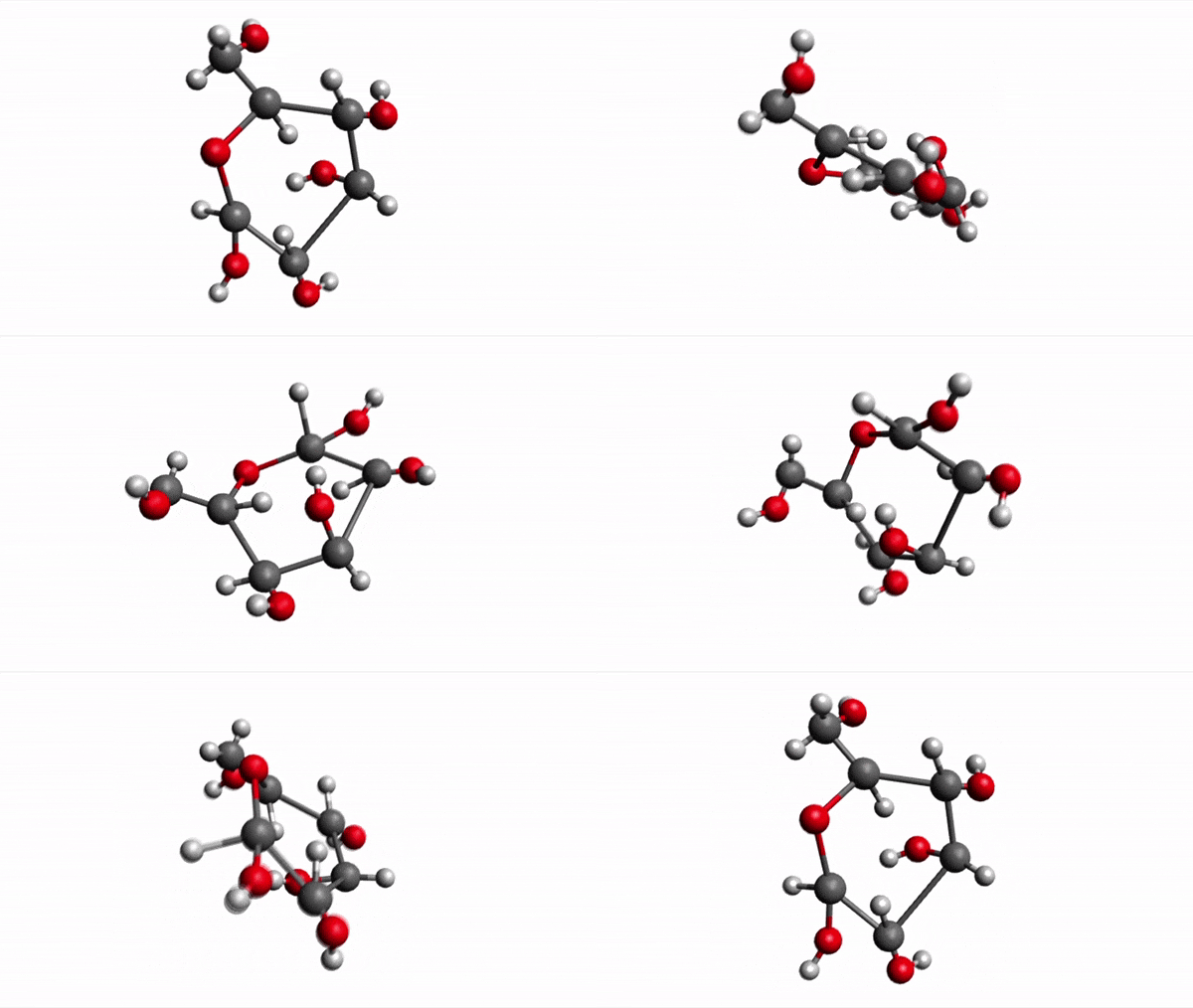
Glucose is the most abundant type of monosaccharide. It is a simple sugar, an important energy source for many living organisms, and is a component of many carbohydrates. It is the main sugar that our body manufactures.
STRUCTURE
Glucose in a ring form can have two different arrangements of the hydroxyl group (−OH) around the anomeric carbon (carbon 1 that becomes asymmetric in the process of ring formation). If the hydroxyl group is below carbon number 1 in the sugar, it is said to be in the alpha (α) position, and if it is above the plane, it is said to be in the beta (β) position.
ROLE IN METABOLISM
Glucose is very important in energy consumption. Many biomolecules such as carbohydrates, lipids, and proteins break down into glucose. It then serves as the primary fuel of mammals for metabolism.
LEGEND
RED - Oxygen
BLACK - Carbon
GREY - Hydrogen
GALACTOSE
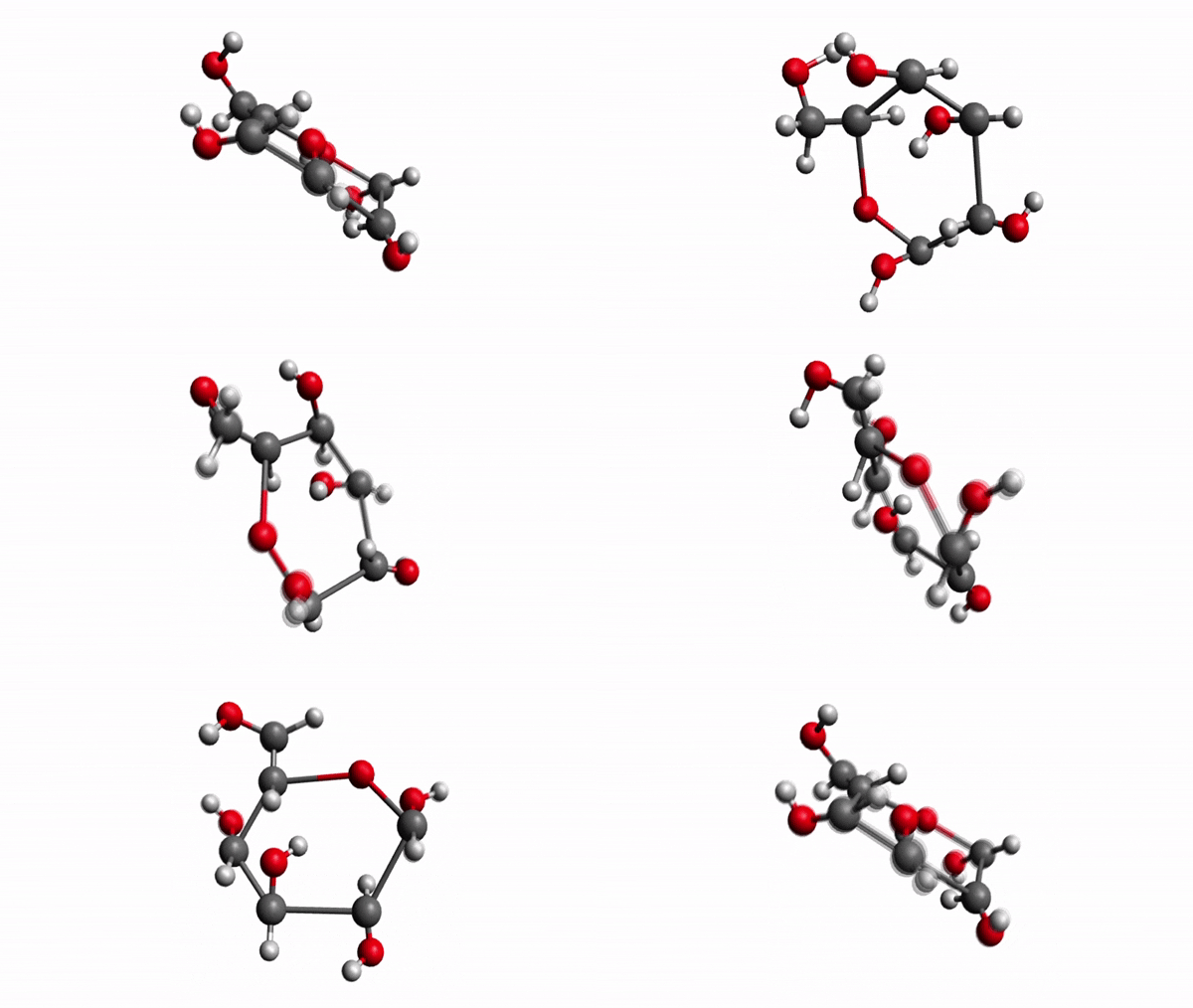
Galactose is more commonly found in the disaccharide, lactose, or milk sugar. It is found as the monosaccharide in peas. Galactose is classified as a monosaccharide, an aldose, a hexose, and is a reducing sugar.
STRUCTURE
Galactose can exist in open-chain as well as cyclic form. The chain form of galactose has a similar pattern like glucose.
ROLE IN METABOLISM
Galactose is one of the products of lactose (milk sugar) hydrolysis in the intestine. The following reactions, that take place in the liver, transform galactose into metabolites identical to those of glucose.
LEGEND
RED - Oxygen
BLACK - Carbon
GREY - Hydrogen
FRUCTOSE
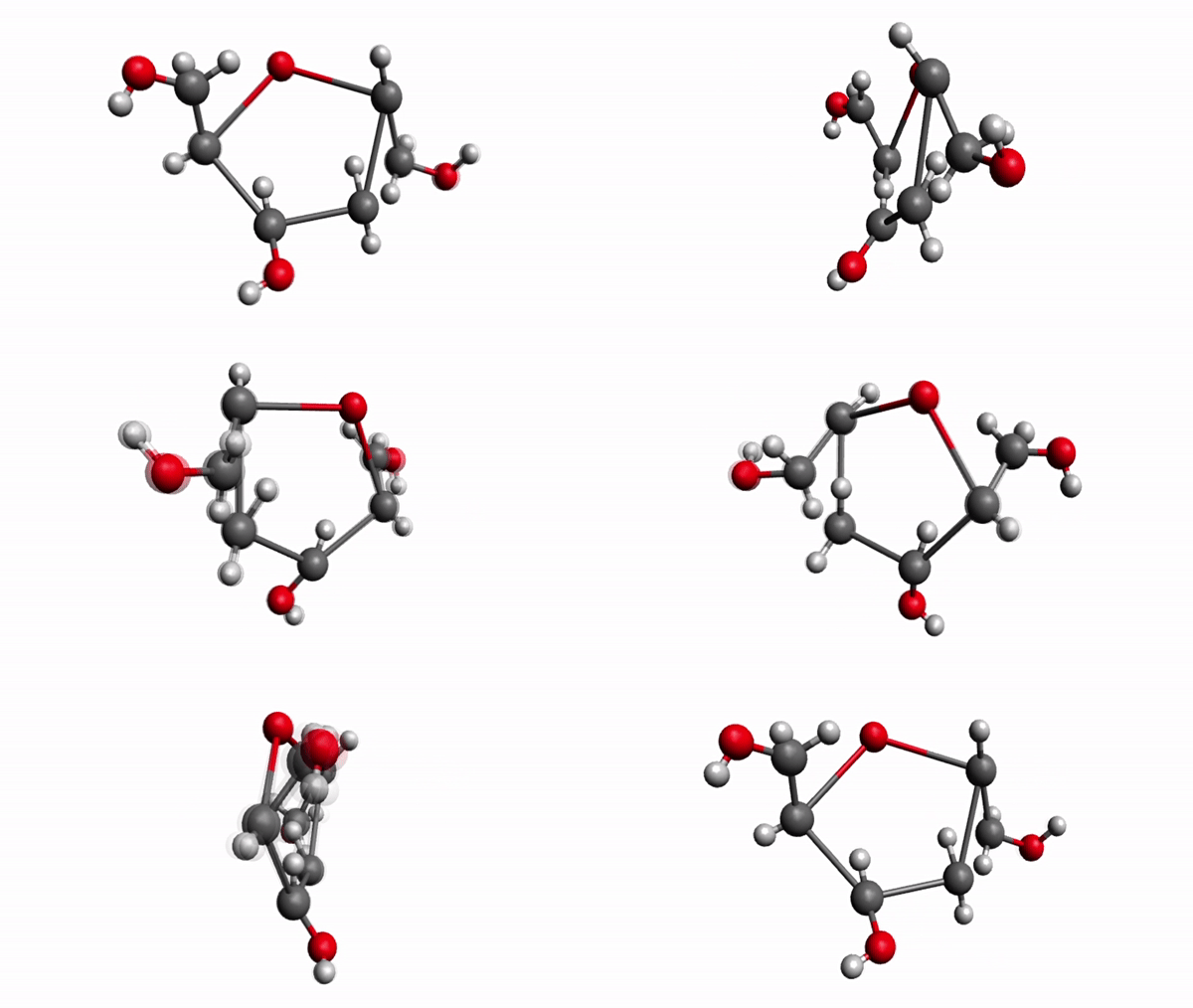
Fructose, or fruit sugar, is a simple ketonic monosaccharide found in many plants, where glucose is often bonded to form the sucrose disaccharide. As well as glucose and galactose, it is one of the three dietary monosaccharides that are absorbed directly into the blood during digestion.
STRUCTURE
Fructose has a cyclic structure. The structure is an intramolecular hemiacetal. It has its carbonyl group at its number two carbon (its a ketone function group). In its cyclic form, it (generally) forms a five-member ring which we call a Furanose ring.
ROLE IN METABOLISM
Fructose is almost entirely metabolized in the liver in humans, where it is directed toward the replenishment of liver glycogen and triglyceride synthesis. Under one percent of ingested fructose is directly converted to plasma triglyceride.
LEGEND
RED - Oxygen
BLACK - Carbon
GREY - Hydrogen